By: Cimmiaron Alvarez, PhD | Published: February 12th, 2026
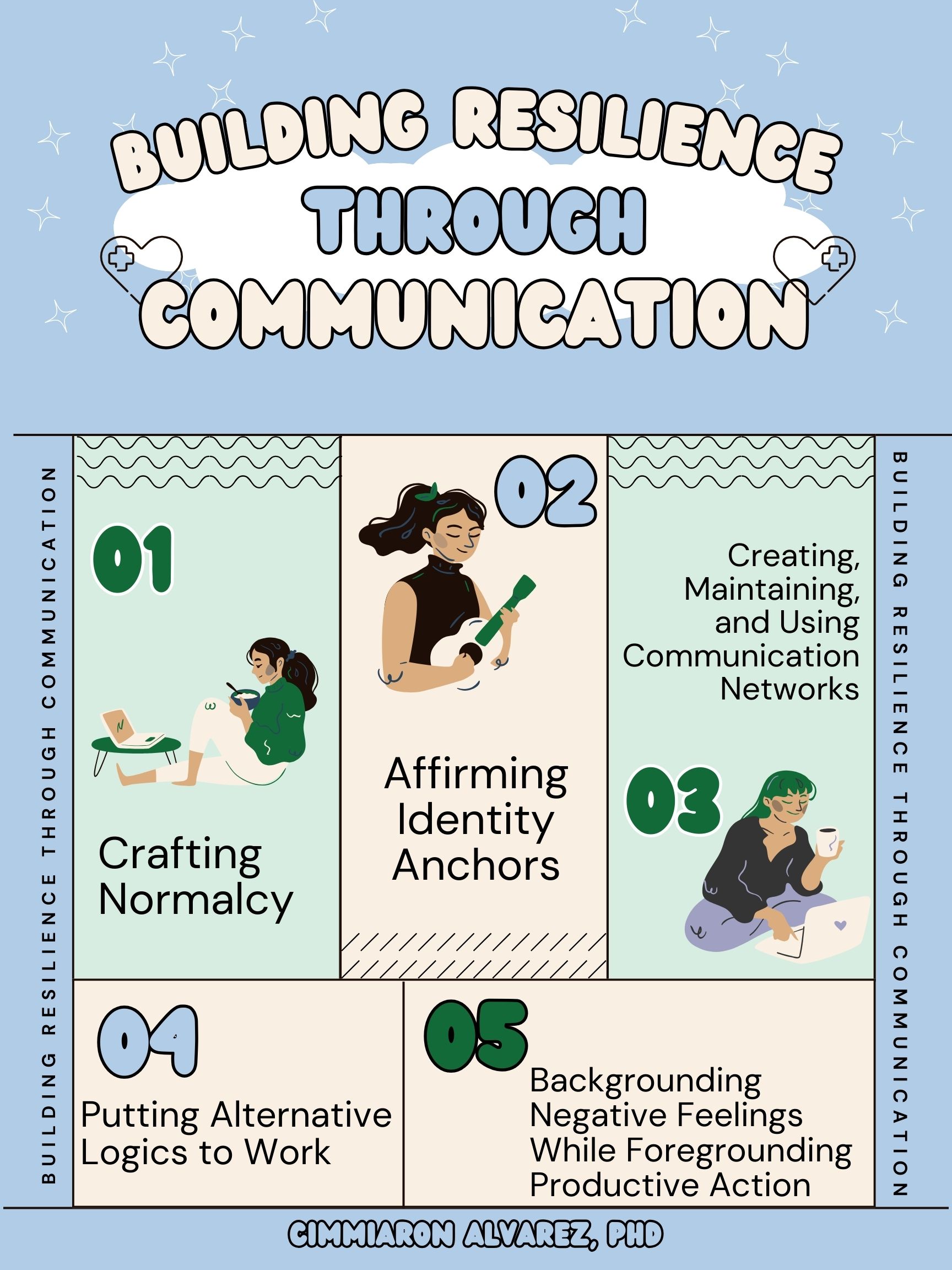
Throughout life, we experience a variety of difficulties. At some point in our lives, friendships will end; we will go through a break-up with a romantic partner; we might have difficulty in school or work; we will experience loss and grief. Despite how common hardships are for individuals, for decades scholars conceptualized resilience, or the ability to establish a new normal following hardship (Buzzanell, 2010), as a trait. In other words, some people were inherently more resilient than others and there was nothing that a person could do to be more resilient. Buzzanell challenged this idea and established that resilience is communicative. Thus, we can communicate in ways that help us be more resilient through five processes: (a) crafting normalcy, (b) affirming identity anchors, (c) creating, maintaining, and using communication networks, (d) putting alternative logics to work, and (e) backgrounding negative feelings while foregrounding productive action. Below, I will explain each of these resilience processes and provide examples about how you might enact them when you are experiencing difficulties.
Crafting normalcy occurs when we establish new routines and rituals and create a new way of being. When having difficulty understanding the material in a class, you might establish a new study routine, like handwriting and then using flashcards. Similarly, following a break-up, you might establish rituals that help you celebrate self-care, such as journaling. Regardless of what routines or rituals you create, crafting normalcy helps you establish a normal within your current life experiences.

When affirming identity anchors, individuals emphasize important parts of their identity to remember what is important to them. During difficult times, you might lean on your spiritual identity to find strength. You might also emphasize cultural or familial values that help you feel strong, capable, or connected. Everyone has several aspects of their identity that can help them enact resilience during tough times.
Other individuals can help you by providing emotional or even physical aid. Creating, maintaining, and utilizing communication networks allow you to draw on such aid. For example, you might call a friend when you have a flat tire and need a ride (utilizing). You might catch up with friends when you are feeling lonely (maintaining). Or you might create new communication networks of people who have similar experiences, like when joining a support group.
When putting alternative logics to work, people find humor in, or positivity that comes from, the difficult situation. Following the illness and loss of a loved one, you might use alternative logics when you say: “they are in a better place now” or “they are no longer in pain.” In other words, people use alternative logics to reframe the difficult or stressful situation to look at the ‘bright side.’
Backgrounding negative feelings while foregrounding productive action occurs when people acknowledge they feel bad, however, they do not wallow in those feelings. Instead, they focus on what they can control. After failing an exam, you might acknowledge that you are upset and then identify ways that you can improve in the future, such as asking questions and attending office hours. Sometimes, the productive action helps you handle the problem, such as doing research when you have a difficult decision. Other times, productive action might help you step away from the problem for a little while, such as going on a walk or taking a break.
These processes help people be more resilient by emphasizing adaption, identity, helpful others, positivity, and specific solutions. There is no right way to engage in any of the processes; similarly, individuals might experience a similar hardship and respond using different resilience processes. Following job loss, I might engage in productive action by spending two hours each day searching for and applying for jobs. In contrast, someone else might utilize their communication networks by asking friends and family if their company is hiring. And still, another might put alternative logics to work when they say that the job loss “was a blessing in disguise” and allowed them to open their own business. Regardless of how you respond during difficulties, knowing the five processes can help you communicate in more resilient ways. Overtime, as you utilize these processes more, you craft resilience that you can draw on during future hardships.
You must be logged in to post a comment.