By: Michael Matthews | Published: January 27th, 2026

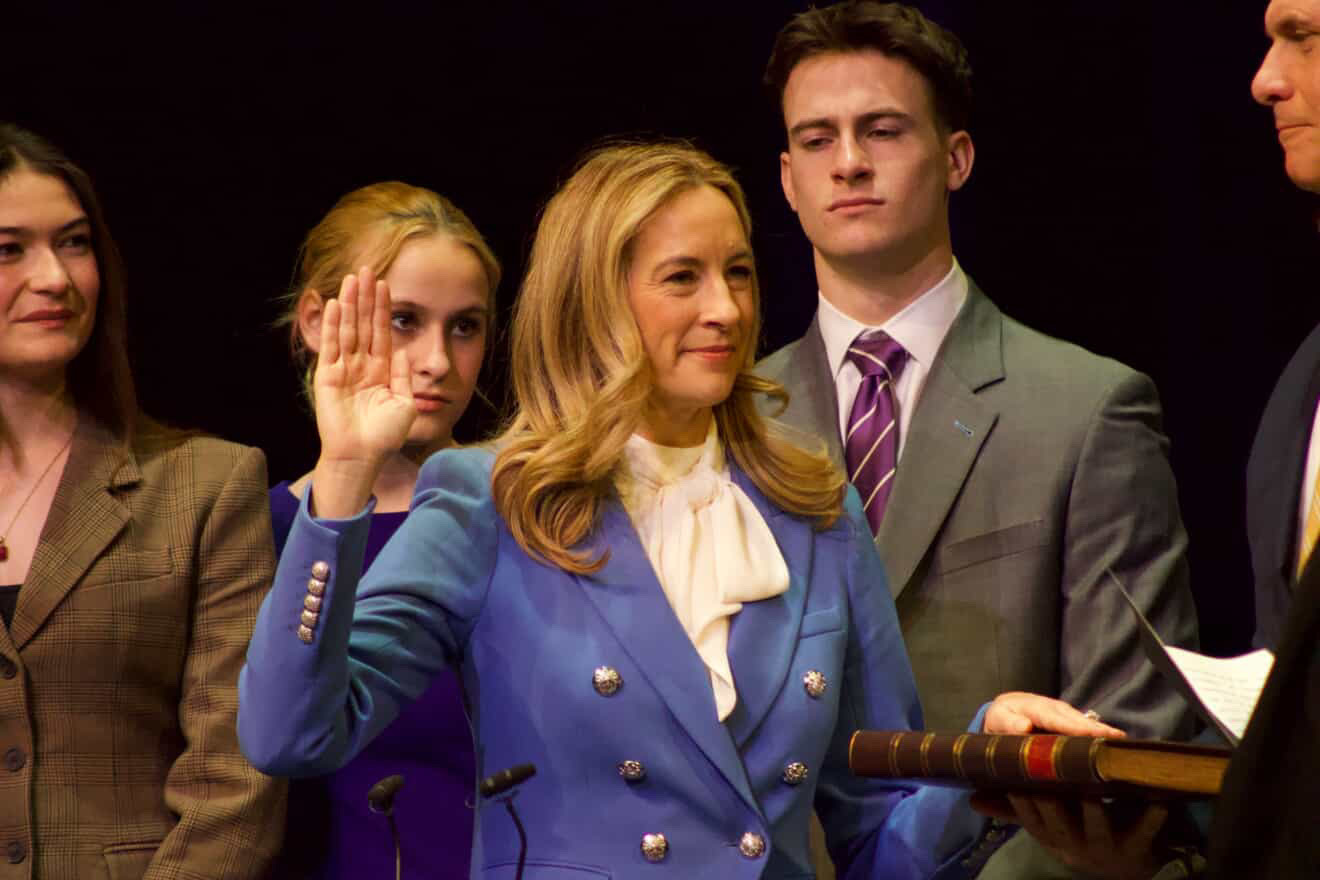
Mikie Sherrill’s first week as governor began with being sworn in on January 20th, 2026, in Newark at the New Jersey Performing Arts Center, a break from the traditional ceremonial site, the capital of the state. This move symbolized a departure from standard political norms. Prior to becoming governor, Representative Mikie Sherrill represented New Jersey’s 11th Congressional District which currently includes parts of Essex, Morris, and Passaic Counties. Upon entering office Sherrill signed a series of six executive orders aimed at lowering costs, improving children’s online safety, mental health and tightening government accountability.
On day one, Governor Sherrill declared a state of emergency on utility costs, ordering regulators to halt pending electric rate hikes that were sending household bills soaring. She was sending a message that affordability would not be a talking point, but a governing priority. Sherrill chose immediate relief over long term fixes down the road. Energy policy became the foundation of her first week. She paired the rate freeze with a push to expand in-state power generation, acknowledging that the states demand has outpaced its supply. Accelerating solar and storage, revisiting nuclear, and recognizing the short-term role of natural gas to stabilize the grid.

Governor Sherrill also signed an order stating that people must publicly file detailed financial disclosures, blind trusts get formal guardrails, officials can be forced to divest closely-held business interests that do government business, and the State Ethics Commission gets clearer enforcement power. There must be accountability in the Governor’s Office, which targets red tape, delays and pushes agencies to deliver more efficient and more resident-focused results. Another executive order involves a red-tape and transparency overhaul.
Governor Sherrill signed addresses treating children’s mental health and online safety as a core public-health priority. Actions include a Department of Health office to coordinate online safety, review technology online safety, review technology policies for children, and foster research into social media’s impact on youth.

During the Governor’s third and fourth days in office, Sherrill was actively addressing and managing the impending winter snow and ice storm. Governor Mikie Sherrill declared a State of emergency. The Governor announced commercial vehicle travel restrictions on highways and advised residents to make plans to stay home due to dangerous conditions. Sherrill continued to focus on her campaign promise to lower energy costs and initiated a state of emergency regarding electricity costs.
As the week continued, Governor Sherrill looked toward relationship-building. Sherrill began engaging with legislative leaders and local officials. This is important because the Governor believes in collaboration over confrontation. As of January 26th, ending the first week as Governor, Sherrill lifted the State of Emergency that was declared across all 21 counties in New Jersey due to severe winter weather. Sherrill said, “From the minute I was sworn in as governor, my Administration has worked to ready our state for this weekend’s severe weather. I want to thank all of the workers across our state who responded to the weather event with urgency and seamless coordination, keeping New Jerseyans safe and warm during the worst storm we’ve seen in a decade.”
As we approach week two and thaw out from this storm, we will look forward to seeing more of what Governor Sherrill has lined-up next. For weekly cover and accountability of the new Governor’s Administration, regularly check with Michael Matthews’s coverage of New Jersey Governor Mikie Sherrill.
You must be logged in to post a comment.