By: Rashan Addison & David Macaulay-Smith | Published: February 26th, 2026
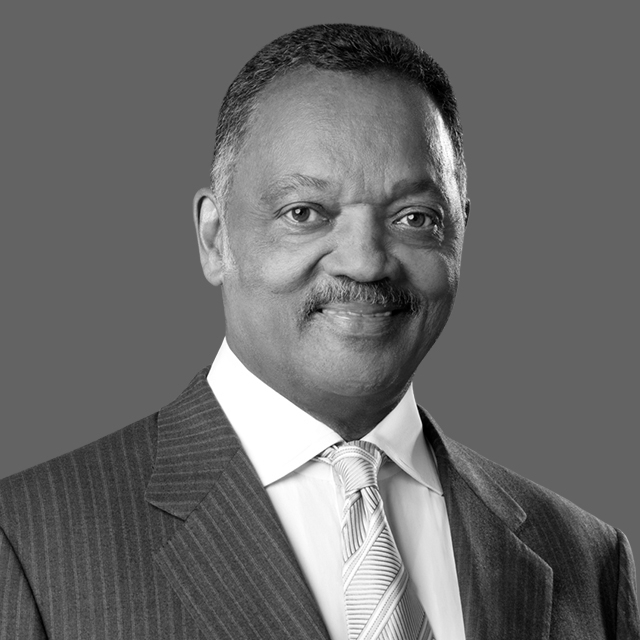
Rev. Jesse Louis Jackson Sr., the civil rights leader who transformed the protest politics of the 1960s into sustained campaigns for Black political and economic power, died Feb. 17, 2026, at his home in Chicago. He was 84.

His family said he died peacefully after a yearslong battle with Parkinson’s disease and a later diagnosis of progressive supranuclear palsy.
For more than six decades, Jackson stood at the center of the nation’s debates over race, representation and economic justice. A protégé of the Rev. Martin Luther King Jr., Jackson emerged from the Southern civil rights movement determined to push its victories beyond desegregation and into boardrooms, ballot boxes and global diplomacy.
Born Oct. 8, 1941, in Greenville, South Carolina, Jackson grew up under segregation and began organizing as a college student. He later joined the Southern Christian Leadership Conference, working on voter registration and economic justice initiatives. He was in Memphis, Tennessee, in April 1968 during King’s assassination, an event that shaped the direction of his public life.
In 1971, Jackson founded Operation PUSH, short for People United to Save Humanity. The organization focused on economic empowerment, pressing major corporations to hire more Black executives, expand contracts with minority-owned businesses and invest in Black media. Through boycotts and negotiated agreements, PUSH secured public commitments from companies to increase minority hiring and supplier diversity at a time when few firms tracked such data.
Jackson argued that Black consumer spending carried economic leverage and should translate into ownership and opportunity. His campaigns contributed to the expansion of minority business programs and corporate diversity initiatives that later became standard practice across industries.
He broadened that strategy in 1984 with the formation of the National Rainbow Coalition, later merged with PUSH into the Rainbow PUSH Coalition. The coalition united Black voters with Latino communities, labor groups, family farmers and low-income Americans around a shared platform that emphasized voting rights, economic equity and access to education.
Jackson’s presidential campaigns in 1984 and 1988 reshaped the Democratic electorate. In 1988, he won 11 primaries and caucuses and received more than 6 million votes, finishing second in the race for the Democratic Party nomination. His success increased Black voter participation nationwide and led to changes in delegate allocation rules that expanded minority representation within the party.

At the 1988 Democratic National Convention, Jackson delivered his “Keep Hope Alive” address, urging inclusion for what he called “the locked out and left out.” Drawing on his upbringing, he reminded supporters, “I was born in the slum, but the slum was not born in me,” tying his candidacy to broader aspirations for political access.
His campaigns demonstrated that a Black candidate could compete seriously on a national stage, laying groundwork for future candidates, including Barack Obama, who later credited Jackson with expanding voter registration and building political infrastructure in underserved communities.
Jackson also used his prominence to influence foreign policy debates. In 1983, he negotiated the release of captured U.S. Navy pilot Lt. Robert Goodman from Syria. He later secured the release of Americans detained in Cuba and traveled to Iraq in 1990 to negotiate the freedom of U.S. hostages. Supporters described those efforts as humanitarian missions that leveraged moral authority when formal diplomatic channels stalled.
Throughout the 1980s, Jackson advocated for U.S. sanctions against South Africa’s apartheid government and supported divestment campaigns aimed at dismantling racial segregation abroad. He framed the struggle for Black equality in the United States as part of a global human rights movement.

His career included controversy. During the 1984 campaign, he apologized publicly for derogatory remarks about Jewish Americans that became public, calling the comments hurtful and wrong. The episode marked one of the most difficult moments of his national political life.
In later years, Jackson remained active in voting rights marches, labor demonstrations and criminal justice reform campaigns. Even as illness slowed his movements, he continued to lead audiences in the affirmation that became synonymous with his ministry and activism: “I am somebody.” The phrase echoed in churches and classrooms, reinforcing dignity in communities confronting poverty, discrimination and disinvestment.
Jackson’s legacy rests not only in speeches but in structures. He built organizations that linked churches to political campaigns, consumer boycotts to corporate negotiations and grassroots registration drives to national conventions. He helped normalize the expectation that presidential candidates address racial disparities directly and that Black voters represent a decisive national constituency.
From the segregated South to the convention hall, Jackson expanded the reach of Black political participation and economic advocacy. His life traced the arc of the modern civil rights movement, carrying its demands from the streets into the centers of American power.
You must be logged in to post a comment.