By: Nick Hathaway | Publish Date: April 9th, 2026

On today’s Market Watch we will be looking at the ceasefire of the U.S.-Iranian War and the impact it has on members of the Kean community. After weeks of global uncertainty, financial markets are beginning to stabilize as investors react to the news of a ceasefire and the reopening of major oil routes in the Middle East.
Here in America, the stock market has already responded. As CNN Buisness reported, The Dow Jones Industrial Average has surged, leading to greater optimism.
“US stocks closed sharply higher: The Dow soared 1,325 points, or 2.85%, and had its best day of the year. The S&P 500 gained 2.51%, and the tech-heavy Nasdaq Composite surged 2.8%,” as written in CNN Business.
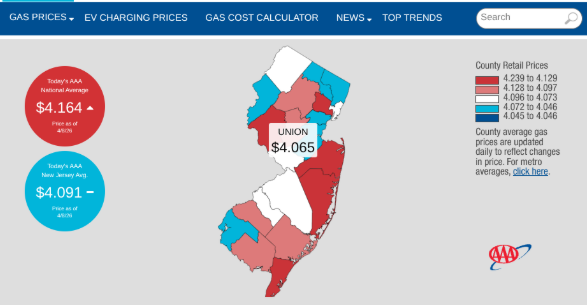
Since our previous report on gas prices, we have seen prices climb sharply across the country. The national average has now risen to about $4.16 per gallon, while drivers here in New Jersey are paying about $4.06 per gallon. For many students and their families, prices skyrocketing at the pump are starting to be felt in everyday life.
For college students, especially commuters like many students here at Kean University, higher gas prices also mean more money spent just getting to class or work.

Rising gas prices often have a ripple effect across the economy. When fuel becomes more expensive, transportation costs increase for businesses that move goods by truck, rail or plane. Those higher costs are usually passed on to consumers, meaning groceries, delivery services and everyday products can become more expensive.
There are also major economic concerns; persistent increases in fuel prices can contribute to inflation, strain of household budgets, and reduce discretionary spending. When people spend more on gas and on the higher costs of other services that come with rising gas prices, they could be forced to cut back on other purchases.
This can greatly slow local economic activity and affect businesses that rely on consumer spending. This could be felt by small businesses owned by members of the community. For Kean students, this could lead to less time spent going out with friends.
Stay tuned next Thursday afternoon for the next Market Watch. As always, we’ll continue keeping an eye on the numbers and what they mean for Kean students and the broader community. Stay ready, stay informed, and stay tuned!
You must be logged in to post a comment.