By: Melanie Seepersad | Publish Date: April ##th, 2026
The study of microplastics has been around since the early 1970s, and it is still a relevant topic in today’s time. Kean University’s campus highlights and utilizes microplastics in various forms, from small black plastic spoons and forks to large gallons of plastic water bottles.

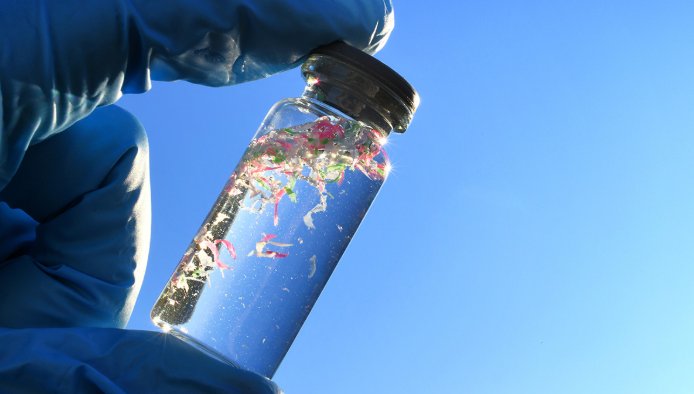
Microplastics are plastic particles, typically less than 5 millimeters in size, including nanoplastics, coming from broken-down trash or intentionally manufactured items such as microbeads. Marine life often consumes microplastics, which are widespread in soil, air, and oceans, leading to reproductive and developmental problems.
“Plastics are commonly used throughout the campus. I even use plastic forks on campus since they are right there. I do not even bother to find alternatives to plastic because it is just everywhere,” said Mariah Gunter, Communications-Media and Film major at Kean University. “It is not something you can easily avoid, like we even breathe it every day.”
Today’s studies prove that microplastics can harmfully affect the human body. BBC explains that it may interact with the network of hormones in the body or damage the cellular membranes, as microplastics are tiny enough to cross and attach within cells. As scientists confirmed, consumption of microplastics has increased sixfold since 1990, especially in different global spots, including the US, China, parts of the Middle East, North Africa, and even Scandinavia.
“We once thought plastic pollution was something we threw away, until microplastics proved there is no ‘away,’ only something that will continuously return to our bodies,” Ashley Rodriguez, a computer science major at Kean, said.
While it is considered impossible to avoid ingesting microplastics as they are present in global water, air, and soil systems, there are a few ways a person can significantly reduce their daily intake through certain lifestyle changes, according to BBC and SELF.
- Investing in a Water Filter
Microplastics are commonly found in tap water. One study in the United Kingdom had found them in all 177 samples of tested tap water, with no recognizable difference in microplastic concentration from bottled water. This is a worldwide problem, as it is also seen in the United States, China, Europe, and more countries. To prevent this issue, buying a decent filter, even a simple carbon filter, can remove up to 90% of microplastics. Brita is well-known for its inexpensive water filter pitchers, which are recommended for many college students living in dorms.

- Avoid Plastic Utensils
Plastic utensils are commonly used on campus and can be found in all the food centers. It is extremely challenging to not use plastic utensils, as they are convenient to use, and metal utensils are hardly provided. They are also relatively cheap and easy to dispose of after use. However, they contain many microplastics per piece of cutlery. These days, there are foldable metal utensils available on the market, which are a great alternative to plastic utensils. On Amazon, they are sold at a reasonable price and have many different options to choose from. Having a set of metal utensils instead of relying on plastic utensils can encourage less use of plastic and lessen the chances of ingesting microplastics.
- Avoid Ultra-Processed Foods
According to SELF, ultra-processed foods are industrial formulations of substances that are refined from whole foods, such as oils, fats, flours, variants of sugar, and cheap parts of animal foods. Foods like fish and fresh vegetables contain some microplastics because of environmental contamination. However, these foods are more exposed to plastics during processing. For instance, a study found there are more microplastics in instant rice than in uncooked rice. If the food comes in plastic wrapping or packaging, it can release more microplastics onto the food. Although it is exceedingly difficult to dodge ultra-processed foods, as they are mostly budget-friendly, try to avoid consistently eating foods like flavored yogurt, frozen meals, instant noodles, and lunch meats. If possible, try to substitute these foods with canned vegetables, canned fish, and even fresh ingredients.
- Use a Refillable Metal or Glass Water Bottle
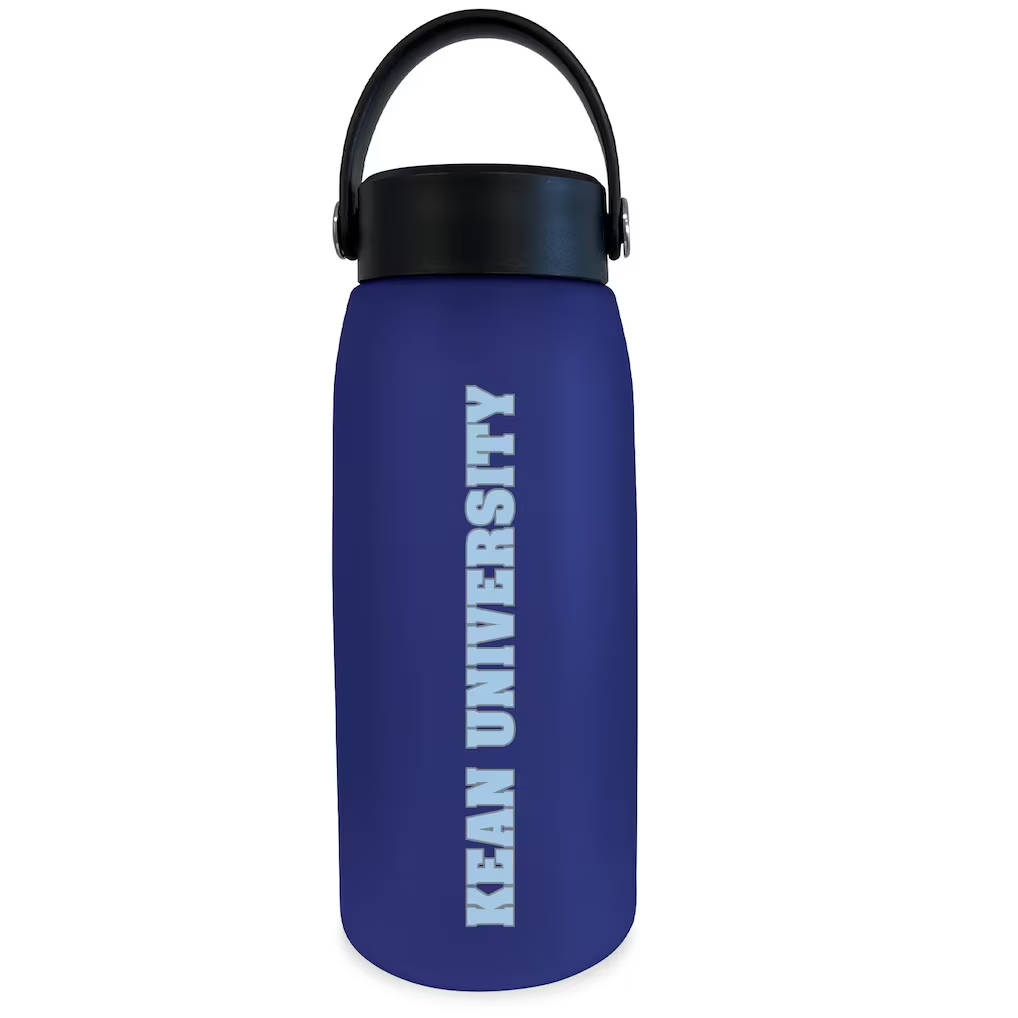
It is best to skip the single-use bottled water as often as you can. A plastic water bottle is full of plastic, but it is fine to grab one if you are in a hurry; just do not make it your go-to. Also, it is recommended to not drink from it if it is left in a warm place, as it increases the chance that plastic will seep into the water. The best solution is to use a refillable bottle made of metal or glass. Using a good water filter and a metal or glass refillable bottle can lower the chances of ingesting many microplastics compared to using a plastic bottle. Companies such as Owala, Waterdrop, Bink, and even Kean University offer many metal or glass bottles with plenty of color/design options.
- Order In Less
Although it is quite common for college students to order food, it is best recommended to limit how much fast food you ingest, especially if it comes in a plastic container. With the heat of the food steaming in the plastic container, the microplastics will bleed into the food, including the plastic utensils that come with the food. If you are buying fast food, it is best advised not to reheat the leftover food in the plastic container.
It is nearly impossible to avoid microplastics, but there are ways to reduce consumption. Recent studies have demonstrated a link between microplastics and inflammation, colorectal cancers, lung cancer, and numerous other diseases. Microplastics can even affect those with asthma, which is already difficult as is, let alone with microplastics and nanoplastics are lingering in the air.
If it is possible to redesign products, upgrade water-treatment filtration, and expand litter-capture programs, microplastic pollution would be reduced. When governments, industries, and users act together, marine life and human health can improve; toxic exposure drops, carbon emissions from plastic production fall, and coastal economies become more resilient.
It’s up to us as a society to answer the question: How can we redesign everyday products and habits so that microplastics never enter our ecosystems in the first place?
You must be logged in to post a comment.